
Astrology is amazing. I’m a Leo, and I will be happy to tell you how I am better than you in every way. All the attributes apply to me, and I am so proud of myself!
Sometimes, we talk about these things at work. “Well, what do you expect from Charles? He’s a Gemini. He’ll change his mind two more times before the end of the day.” Maybe you also enjoy comparing signs, checking your horoscope, or blaming a rough day on Mercury being in retrograde (the final retrograde of 2026 began October 24, if you were wondering).
Conversations about astrological signs sometimes become a lighthearted way for coworkers and team members to compare personalities, preferences, and communication styles. Some employees may believe that astrology offers valuable insights into team dynamics or how people connect on a deeper level. But when it comes to hiring, promotions, work assignments, or performance reviews, astrology should stay out of it. Instead, employers should focus on job-related items, such as professional skills, experience/education, qualifications, and performance.
Can Astrology Influence Employment Decisions?
A person’s zodiac sign can’t predict how well someone will perform at work. It won’t show whether they can meet deadlines, make sound decisions, work well with others, or manage the day-to-day responsibilities of the job.
Comments about one sign being organized or another being difficult may seem harmless, but they are still stereotypes. If those assumptions influence a workplace decision, a qualified person could miss an opportunity for a reason that has nothing to do with their ability to do the job (i.e., “I would never hire a Scorpio. They’re just too volatile.”).
Workplace Personality Assessments vs. Astrology
Besides, we have valid, viable personality assessments for workplace environments. DiSC. Kolbe. Myers-Briggs. Emergenetics. Predictive Index.
Employers can legally test for whatever they want if the test is valid and tied to the job. Remember, we don’t give a janitor candidate an accounting test, and we shouldn’t decide to hire Sagittarians and Libras “because they’re supposed to be stable.”
If an employment practice unfairly screens out members of a group, the employer may need to show that the practice is job-related and necessary for the role. That would be difficult to do with astrology because there is no proven connection between a person’s sign and job performance.
Birth Dates, Astrology, and Age Discrimination
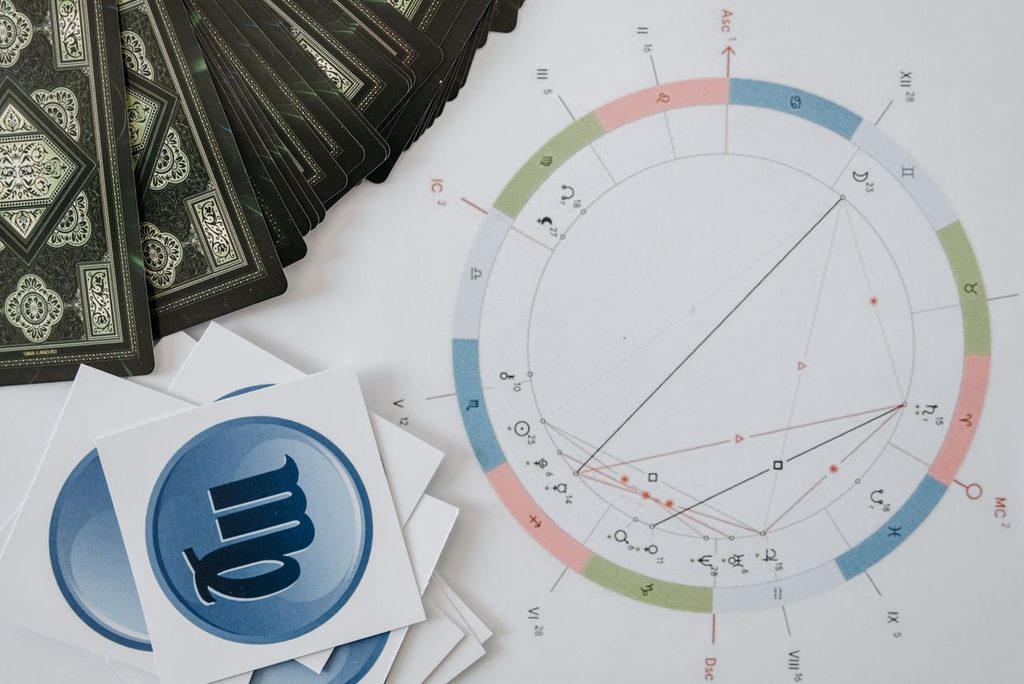
Birth dates can also raise concerns. The birth year is required for most personal astrology charts, and we have laws that protect workers age 40 and older from age discrimination. Imagine looking at someone’s chart just for fun, not hiring them for a different reason, then having to prove that their age had nothing to do with it. The EEOC won’t care that you didn’t want to put a Pisces with a Capricorn.
Astrology, Religious Beliefs, and Workplace Decisions
For some people, astrology may also be connected to religious beliefs. A manager may not mean any harm by asking about a birthday or zodiac sign, but if that information comes up and somehow attaches itself to a poor performance review, or less-than-desirable scheduling, it may look like adverse action.
Astrology in the Workplace: Keep It Fun
This does not mean astrology has to disappear from casual workplace conversations. If people enjoy it, and the conversation is voluntary and respectful, it can stay where it belongs—as something fun. The important thing is to keep entertainment separate from employment decisions.
Keep checking your horoscope and being mindful of retrogrades if that’s your thing. Just keep those astrological decisions away from employment decisions, and you’re guaranteed to have a sunny day ahead.
By: Amy Matthews, SPHR